
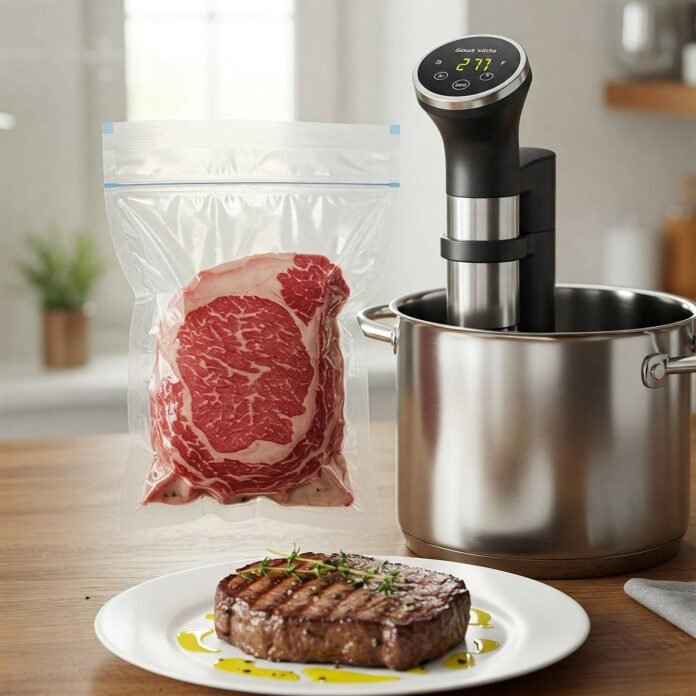
Hey there, culinary adventurers! Have you heard about the amazing technique called sous vide cooking and wondered what all the fuss is about? Well, you’ve come to the right place! This step-by-step beginner’s guide will demystify this method and show you how easy it is to achieve restaurant-quality results in your own kitchen. So, get ready to unlock a new level of precision and flavor in your cooking!
Understanding Sous Vide: The Basics
First, let’s start with the fundamentals. Sous vide cooking, pronounced “soo veed,” is a French term that literally means “under vacuum.” Essentially, it’s a precise cooking method where food is vacuum-sealed in a bag and then immersed in a water bath that is held at a very specific, consistent temperature. Because of this precise temperature control, food cooks evenly from edge to edge, eliminating the risk of overcooked or undercooked spots. For a more in-depth scientific explanation, you can explore resources like ChefSteps (Outbound Reference: https://www.chefsteps.com/).
The Benefits of Cooking Sous Vide
You might be thinking, “Why bother with this extra step?” However, this technique offers some incredible advantages. For instance, you can achieve consistent doneness throughout, whether it’s a steak cooked to medium-rare perfection or incredibly tender chicken breast. Furthermore, the vacuum-sealed bag traps in natural juices and aromas, resulting in more flavorful food. Additionally, food cooked this way doesn’t dry out because it’s sealed and cooked at a precise temperature. Finally, you can hold food at the desired temperature for an extended period without overcooking, making it ideal for entertaining.
Your Simple Guide to Getting Started with Sous Vide
Ready to dive in? Here’s a beginner-friendly step-by-step guide.
First, gather your equipment: You’ll need a sous vide immersion circulator (the device that heats and circulates the water), a large pot or container for the water bath, and vacuum-seal bags with a vacuum sealer (or high-quality zip-top bags using the water displacement method).
Next, prepare your food by seasoning it as desired. For meats, you might even want to sear them briefly before or after this process for added texture and flavor.
Then, vacuum-seal your food. To do this, place the seasoned food in a vacuum-seal bag and remove the air using a vacuum sealer.
If you don’t have one, you can use a zip-top bag and the water displacement method (slowly lower the bag into the water, allowing the pressure to push the air out, then seal just before the top reaches the water). Reputable food safety organizations like the USDA offer guidelines on safe food handling (Outbound Reference: https://www.fsis.usda.gov/food-safety/safe-food-handling-and-preparation/food-safety-basics).
After that, set up your water bath by filling your pot or container with water and attaching the sous vide immersion circulator securely to the side.
Now, set the temperature and time. Consult a reliable temperature and time chart for your specific food. Set the immersion circulator to the desired temperature.
Following this, immerse your food. Carefully place the vacuum-sealed bag into the water bath, ensuring it is fully submerged. You may need to weigh it down with a kitchen utensil or sous vide weights to keep it from floating.
Next, cook according to time. Let the food cook for the recommended time. The immersion circulator will maintain the precise water temperature.
Finally, you can finish (optional). For meats, searing after this method creates a delicious crust. Pat the food dry and sear it quickly in a hot pan with oil or butter.

Key Tips for Successful Sous Vide
To ensure your journey is smooth and successful, keep these tips in mind. First, precise temperature control is key. The accuracy of your immersion circulator is crucial for consistent results. Secondly, always prioritize food safety. Follow safe food handling practices, especially when cooking at lower temperatures for extended periods. Furthermore, don’t overcrowd the water bath. Ensure there’s enough space for the water to circulate freely around the bags. Additionally, experiment with flavors. This technique is a great way to infuse foods with herbs, spices, and aromatics in the sealed bag. Finally, start simple. Begin with easier projects like steak or chicken breast to build your confidence.

Easy Starter Recipes for Sous Vide
Ready to try some beginner-friendly recipes? Here are a few great starting points. For instance, try Sous Vide Steak (Medium-Rare): Set your water bath to 130°F (54°C) and cook for 1-4 hours depending on thickness. Another great option is Sous Vide Chicken Breast: Set your water bath to 145°F (63°C) and cook for 1-4 hours depending on thickness. You can also try Sous Vide Salmon: Set your water bath to 130°F (54°C) and cook for 30-45 minutes depending on thickness. Lastly, consider Sous Vide Eggs (Poached Style): Set your water bath to 167°F (75°C) and cook for 13-15 minutes.

Discover Culinary Precision with This Cooking Method!
In conclusion, this cooking method might seem intimidating at first, but as you can see, it’s a straightforward technique that delivers incredible results. With precise temperature control and minimal effort, you can achieve perfectly cooked, flavorful meals that will impress your family and friends. So, take the plunge and explore this exciting world!


